
A running WC is the most under-reported expense in Abuja homes, because in a tank-fed property it does not show up as a bill. It shows up as tankers arriving more often, a pump running at night, and a household quietly concluding that its borehole is weakening.
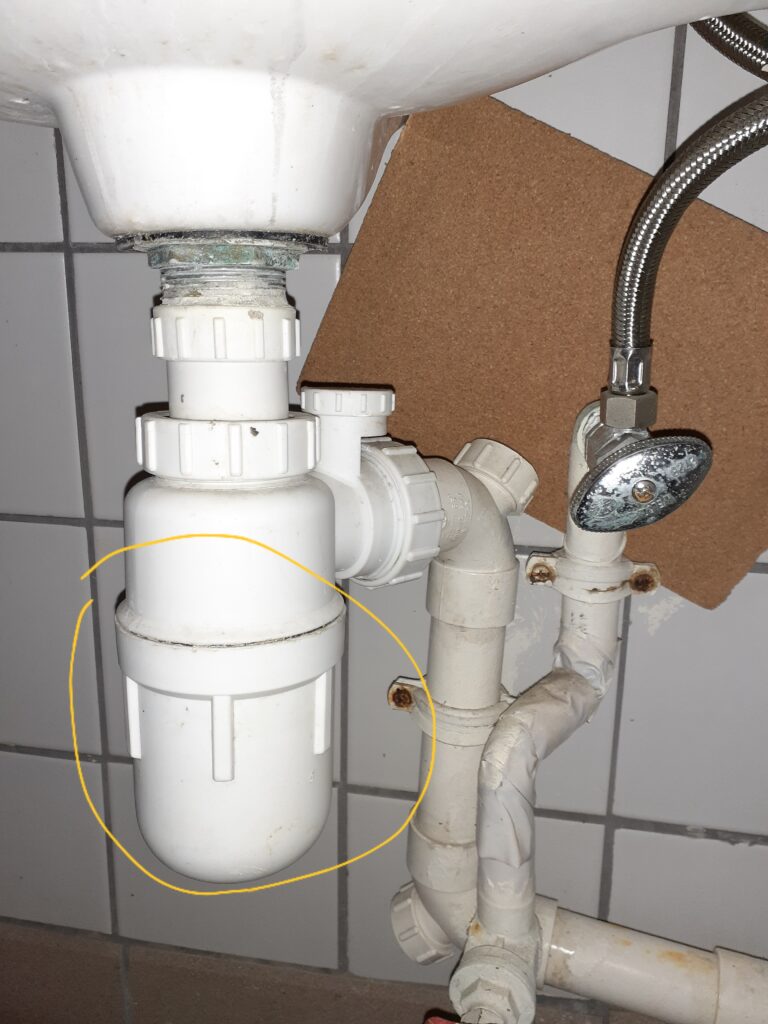
A cistern inlet valve that does not seat properly can pass water continuously and silently into the pan. Nothing overflows, nothing drips on the floor, and nobody investigates, which is exactly why it runs for months.
What we see most often
Inlet valves failing open rather than closed
Low-cost valves degrade to a permanent trickle. Silent, continuous, and easily mistaken for falling borehole yield.
Flush valve seals hardened by sediment
Sediment-laden stored water is hard on rubber. The seal stops seating, and the cistern drains back into the pan between flushes.
Weak flush blamed on the pan, caused by supply
A pan needs a rate of delivery, not just a volume. A part-blocked inlet or low head starves it and no amount of replacing the pan fixes it.
Rocking pans breaking the waste seal
Movement on an imperfectly bedded pan works the connector loose. The result is a slow foul leak under the pan that is smelled long before it is seen.
The engineering, and what it means for you
Two mechanisms explain most WC faults. First, a cistern is a simple float-controlled valve: as water rises, the float closes the inlet. Anything that stops the valve seating, grit on the seat, a perished washer, a float fouling the cistern wall, produces continuous flow. Second, the flush itself depends on discharging a volume of water fast enough to establish a siphon in the trap. Volume without rate does not clear the pan, which is why a slowly refilling cistern gives a weak flush even though it eventually holds the right amount.
Modern dual-flush mechanisms have more sealing surfaces than the older siphon designs they replaced, and each surface is somewhere a leak can start. That is a genuine trade-off: lower designed water use, more components that can pass water when they age.
Replace this with your own observation, for instance the average age at which the inlet valves you replace have failed, or the share of weak-flush calls that turned out to be supply-side rather than the WC itself.
Why this happens in Abuja specifically
- Stored rather than mains water. Tank water carries more fine sediment than a pressurised main. That sediment settles on valve seats and abrades seals, so consumables wear out faster here than the manufacturer’s assumptions allow for.
- Variable head, not constant pressure. The refill rate of your cistern depends on the level in your tank and whether the pump is running. A WC that flushes well at 8am and poorly at 8pm is telling you about your supply, not about your WC.
- Imported fittings, inconsistent spares. Premium bathrooms are often fitted with imported suites whose exact internals are hard to source locally later. Where an exact part is unavailable, a competent universal replacement fitted properly is far better than a forced approximation.
Common customer mistakes
Replacing the whole suite because the flush is weak
The pan is almost never the fault. Check delivery rate and the flush valve seal first.
Putting a brick or bottle in the cistern
It reduces the volume available for the flush and usually produces double-flushing, which uses more water, not less.
Ignoring a cistern that refills by itself
That is water leaving your tank continuously. In an Abuja home it is paid for in tanker deliveries.
Silicone around the base of a rocking pan
It hides the movement and traps the leak underneath. Bed the pan correctly instead.
Our process
Confirm it is the WC at all
We check delivery rate and head before touching the cistern, because a supply problem presenting as a WC problem is extremely common.
Dye-test for silent pass-through
A simple dye test in the cistern shows within minutes whether water is passing into the pan unseen. This is the test that finds the expensive invisible fault.
Repair with the right consumables
Inlet valve, flush seal, connector and isolating valve as needed. Where original parts are unavailable we fit a quality equivalent and tell you exactly what was used.
Re-bed and re-seal if the pan moves
A pan that rocks is re-bedded and the waste connection renewed, not siliconed over.
Frequently asked questions
Why does my toilet keep running after flushing?
Either the inlet valve is not seating, or the flush valve seal is letting cistern water back into the pan. Both are inexpensive consumables and both are same-visit repairs.
How do I tell if my WC is leaking silently?
Put a little food colouring in the cistern and do not flush for thirty minutes. If colour appears in the pan, the flush seal is passing. It is the cheapest diagnostic in plumbing.
My flush is weak even though the cistern is full. Why?
A flush needs rate, not just volume. A partially blocked inlet, a degraded flush valve or low head from your tank will all give you a full cistern and a poor flush.
Can you repair an imported suite or do I need a new one?
Almost always repair. Where the exact original internal is not available in Nigeria, a quality universal replacement fitted correctly performs identically. Replacing a whole suite for the sake of a valve is rarely justified.
What causes a toilet to block repeatedly?
Repeated blockage in the same WC usually points beyond the pan, a partially obstructed branch, insufficient fall on the waste run, or a soakaway that is not accepting flow. Clearing the pan again and again treats the symptom.
Is a rocking toilet serious?
Yes. Movement fatigues the waste connection and produces a foul leak beneath the pan, into the floor build-up. It should be re-bedded rather than sealed over.
Why does my bathroom smell even though everything is clean?
Usually a dry or defective trap, or a failed connector behind the pan letting foul air into the room. It is a plumbing fault, not a cleaning one.
Should I fit a dual-flush cistern?
They reduce designed water use, which matters in a tank-fed house. They also have more sealing surfaces to age. Fit a good one and service it, or the water it saves is lost to a passing seal.
How long should a WC repair take?
Most valve and seal replacements are under an hour. Re-bedding a pan and renewing the waste connection takes longer, mainly because of setting time.
Do you replace concealed cisterns behind tiled walls?
Yes. Access panels exist for exactly this reason, and a well-planned concealed system can be serviced entirely through the flush plate aperture. Where a previous installer tiled over the access, we will discuss the least destructive route before starting.
Key takeaways
- A silently running WC is a continuous drain on stored water and is routinely mistaken for a weakening borehole.
- The dye test takes thirty minutes and finds the most expensive invisible fault in the house.
- Weak flush is about delivery rate and head far more often than about the pan.
- Sediment in stored water shortens the life of WC consumables in Abuja.
- A rocking pan is a foul leak in progress; re-bed it rather than sealing around it.
Sources & methodology
Internal data. Observations on this page come from our own work across the 25 Abuja districts we cover. Where we have no verified record, we describe the pattern rather than quote a number, because we do not publish figures we cannot evidence.
External references. Engineering statements reflect standard, checkable practice: PPR pressure classification and heat-fusion jointing, pressure-decay testing, pump duty-point selection, pressure-vessel pre-charge behaviour, gravity drainage fall, and soil infiltration behaviour in soakaway design.
Get a fixed price for wc & toilet repair in Abuja
Tell us what is happening and where you are. We will tell you what we think it is, what testing we would do to confirm it, and what it will cost, before anyone touches your wall. Call 0706 727 6002 or send a photo on WhatsApp.