
Soakaways do not fail suddenly. They fail gradually for years and then present suddenly, almost always in one heavy week of the rainy season, and almost always to a household that had no warning. The slow showers and gurgling that preceded it were the warning; they were just not recognised as one.
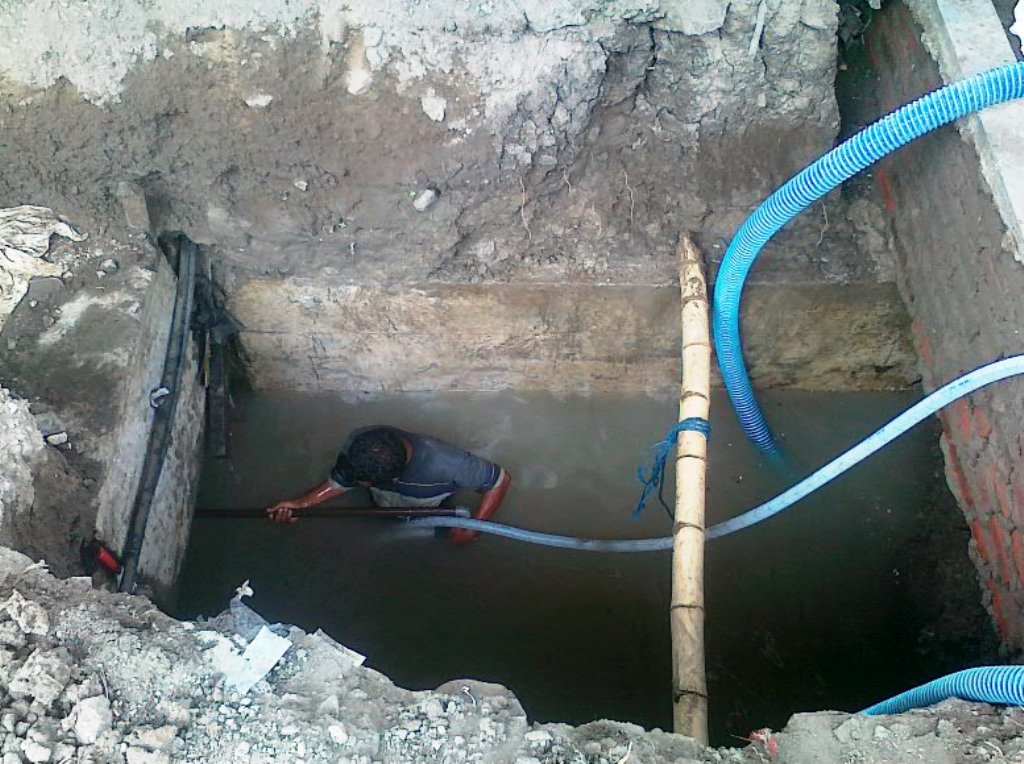
The distinction that matters is simple: a blockage stops flow at a point, and a saturated soakaway stops the system accepting flow at all. They present similarly at the plughole and are completely different problems with completely different costs.
What we see most often
Kitchen lines blocked by cooled fat, not by solids
Warm fat and oil poured down a sink cools within a metre or two and lines the pipe. It is the most preventable blockage there is.
Multiple fixtures slowing at the same time
One slow shower is a local blockage. Every fixture slowing together points downstream, to the main run or the soakaway.
Surcharging manholes during heavy rain only
Classic sign of a system with no spare capacity. It works until the ground is already saturated.
Insufficient fall on long waste runs
A construction defect rather than a maintenance one. Solids settle where the fall is inadequate and the same section blocks repeatedly.
The engineering, and what it means for you
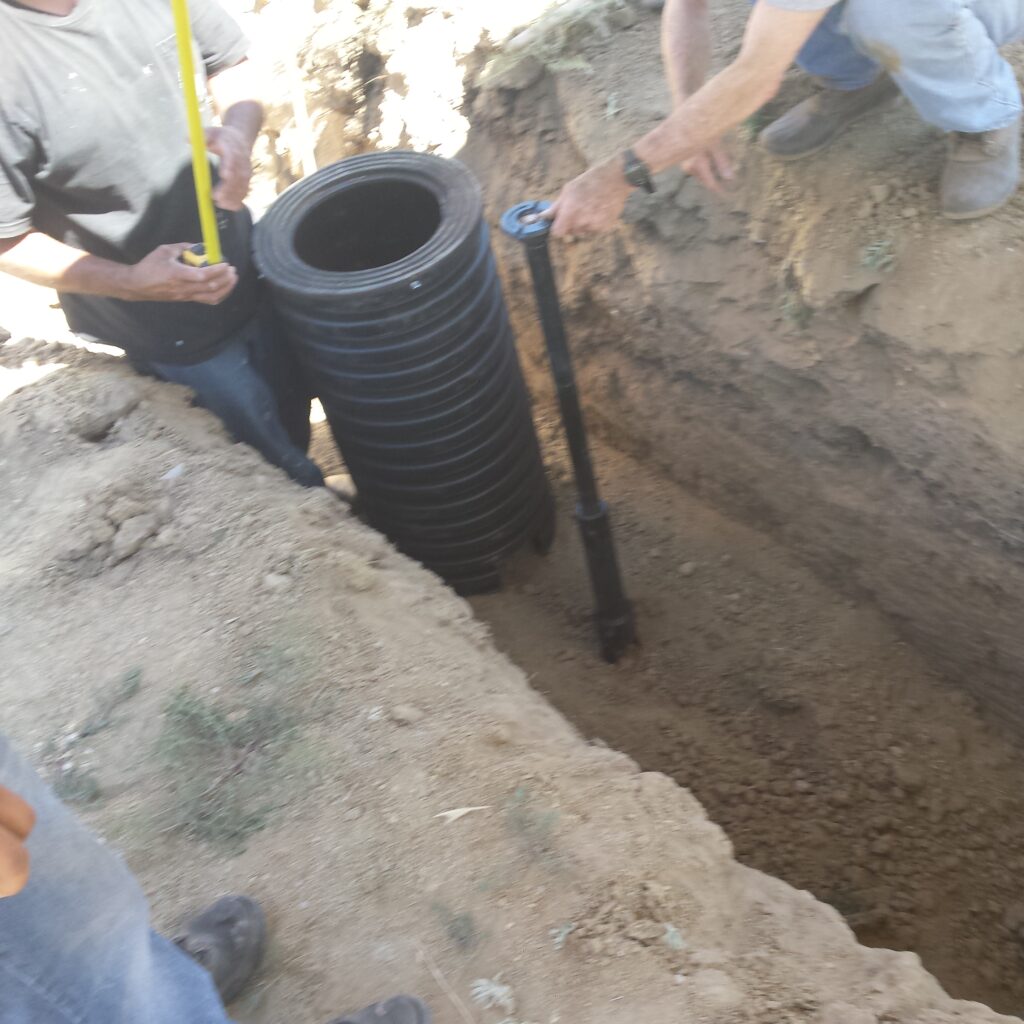
The design principle behind a soakaway is that effluent is dispersed into surrounding ground, and the rate at which that happens is governed by the soil’s infiltration capacity. That capacity is not fixed. It declines as fine material and biological film accumulate in the surrounding soil, and it falls sharply when the surrounding ground is already saturated, which is precisely the condition that exists during sustained rainfall.
Waste pipework relies on gravity and on maintaining an appropriate fall. Too little fall and solids settle out; too much and liquid outruns solids, leaving them behind. Both produce recurring blockage at the same location.
Traps hold a water seal that keeps foul air out of the building. A trap that dries out, or that is siphoned empty by a poorly vented system, stops doing that job, which is why a persistent drain smell is a ventilation and trap question, not a cleaning question.
Replace this with your own data, for instance, what proportion of your rainy-season drainage callouts turn out to be soakaway saturation rather than a blockage in the pipework.
Why this happens in Abuja specifically
- Concentrated seasonal rainfall. A large share of the year’s rain arrives in a few months. Drainage that copes for most of the year can be overwhelmed in a single sustained week, which is why failures cluster rather than spread out.
- Ground that saturates and then cannot accept more. Once surrounding soil is at capacity, a soakaway has nowhere to disperse to. This is the mechanism behind almost every “it only happens when it rains” complaint.
- Long runs on large plots. In Asokoro and Maitama, waste runs from house to chamber are long, and small errors in fall accumulate over distance.
- Silting from dry-season dust. Fine dust accumulates through the dry months and is washed into gullies and chambers by the first serious rain, concentrating a year of sediment into a few days of loading.
Common customer mistakes
Pouring cooking oil and fat down the kitchen sink
The single most common cause of domestic blockage, and entirely avoidable. Let it cool, bin it.
Using caustic drain chemicals repeatedly
They may clear a partial blockage temporarily, they do nothing for a saturated soakaway, and repeated use damages pipework and seals.
Emptying a soakaway without asking why it filled
If the ground can no longer accept flow, emptying is a service you will be buying again shortly.
Connecting roof rainwater into the foul soakaway
It floods the system with clean water exactly when it has least capacity. Surprisingly common on extensions and later alterations.
Our process
Establish blockage versus saturation
We check whether chambers are holding level, and whether the problem is local to one fixture or system-wide. This determines the entire job.
Clear mechanically, not chemically
Rodding and jetting as appropriate, so the obstruction is removed rather than partially dissolved.
Inspect the run for the reason
Chamber condition, fall and any damage. Recurring blockage in one place has a cause, and clearing it without finding that cause guarantees a repeat.
Report honestly on the soakaway
If the soakaway has reached the end of its serviceable life, we say so and explain what rehabilitation or relocation involves, rather than selling you repeat emptying.
Frequently asked questions
Why do all my drains back up only when it rains heavily?
Because the ground around your soakaway is already saturated and cannot accept more. That is capacity, not blockage, and clearing the pipes will not change it.
How often should a soakaway be emptied?
It depends on household size and ground conditions. More useful than a schedule is watching the trend: if the interval between emptyings is shortening, the ground’s infiltration capacity is declining and you should plan for rehabilitation rather than keep paying for emptying.
Are chemical drain cleaners safe to use?
Occasionally and sparingly at worst. Repeatedly, no, they damage seals and pipework, they do nothing for saturation, and they make the eventual mechanical clearance more unpleasant and more expensive.
What actually causes most kitchen blockages?
Fat and oil. They pour as liquid, cool within a short distance, and build up on the pipe wall until the bore closes. Letting it solidify and binning it prevents nearly all of it.
Why does one shower keep blocking while everything else is fine?
A local issue, hair and product at the trap, or insufficient fall on that branch. If it recurs in exactly the same place after clearing, suspect the fall.
There is a drain smell inside the house. Where is it from?
A trap that has lost its water seal, either through evaporation in a rarely used room or by being siphoned out through inadequate ventilation. It is a system fault, not a hygiene one.
Can a blocked drain damage my building?
Sustained saturation around foundations is a genuine concern, and foul water inside the building is a health issue. Neither is something to leave through a rainy season.
Do you use a camera to inspect drains?
Where recurring blockage suggests a defect rather than debris, inspection is the honest way to find it. Clearing the same blockage repeatedly without looking is charging you for the same job several times.
Can rainwater be connected to the same system?
It should not be. Rainwater loads a foul soakaway at exactly the moment it has least spare capacity. If a previous alteration connected them, separating them is often the single most effective fix available.
What does soakaway rehabilitation involve?
Depending on the situation: cleaning and restoring the existing chamber, increasing dispersal area, or relocating to ground with better infiltration. We will set out what your site allows and what each option realistically achieves before you commit.
Key takeaways
- A blockage stops flow at a point; a saturated soakaway stops the system accepting flow at all.
- “Only when it rains” is a capacity symptom, and clearing pipes will not fix it.
- Fat and oil cause most kitchen blockages and are entirely preventable.
- A shortening interval between soakaway emptyings is the warning that matters.
- Repeat blockage in the same location is a defect in fall or pipework, not bad luck.
Sources & methodology
Internal data. Observations on this page come from our own work across the 25 Abuja districts we cover. Where we have no verified record, we describe the pattern rather than quote a number, because we do not publish figures we cannot evidence.
External references. Engineering statements reflect standard, checkable practice: PPR pressure classification and heat-fusion jointing, pressure-decay testing, pump duty-point selection, pressure-vessel pre-charge behaviour, gravity drainage fall, and soil infiltration behaviour in soakaway design.
Get a fixed price for drains & soakaway in Abuja
Tell us what is happening and where you are. We will tell you what we think it is, what testing we would do to confirm it, and what it will cost, before anyone touches your wall. Call 0706 727 6002 or send a photo on WhatsApp.