
Almost every concealed leak we attend in Abuja has already been “fixed” once. Someone chased open the wall under the damp patch, found dry pipe, patched the wall, and left. The damp came back four weeks later, because water does not stay where it leaves the pipe, it runs along the outside of the pipe, along the underside of a slab, or down a wall chase until something stops it.
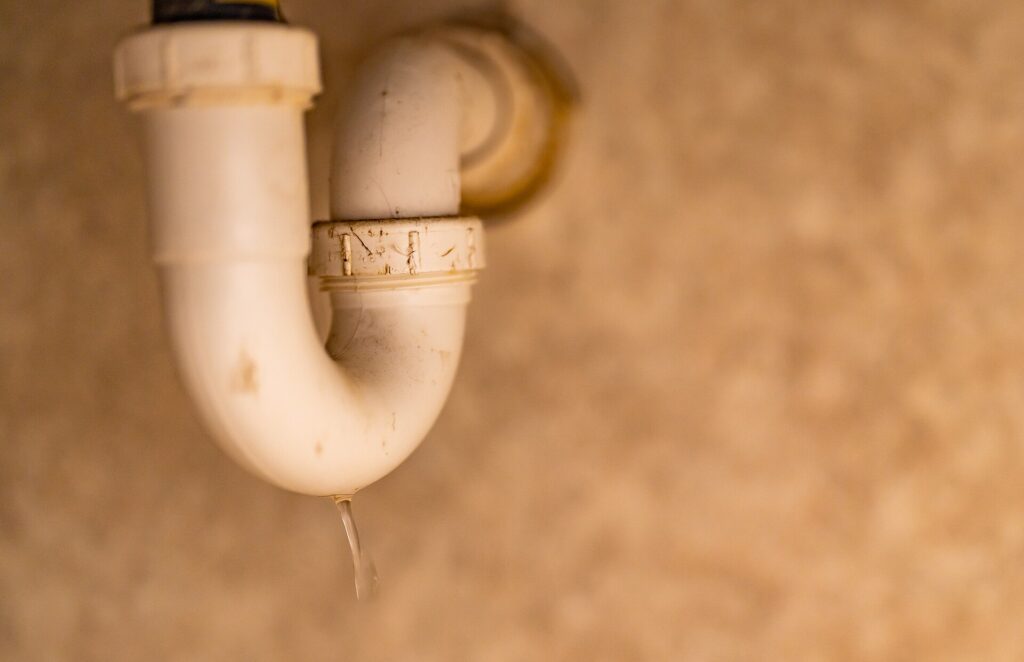
The distance between where a leak is and where it shows is routinely several metres. That single fact is the difference between one clean repair and a wall that gets opened three times.
What we see most often
Damp appearing on the floor below, not beside, the leak
Water tracks along the slab. The wet ceiling is where it found an edge to drip from, which is rarely under the failed joint.
Hot-line failures at fittings near instant heaters
The hottest, most thermally cycled section of the system is the first metre out of the heater, and that is where under-rated fittings give up.
Pressure loss blamed on the pump when the leak is underground
A buried supply run leaking into free-draining ground shows no surface damp at all. The only symptom is a pump that runs more than it should.
Condensation misdiagnosed as a leak
Cold pipe in a humid enclosed duct sweats convincingly. Testing separates the two in minutes; guessing does not.
The engineering, and what it means for you
The physics here is not controversial. A pressurised system that holds a static test pressure without decay has no leak on the tested section; one that decays does. Pressure decay testing is the reason a competent leak job starts with gauges rather than a chisel.
Acoustic detection works because water escaping under pressure through a small orifice generates sound in a characteristic frequency band that travels along the pipe wall. It works well on metal and on pressurised plastic, and poorly on unpressurised waste lines, which is why a waste leak and a supply leak are genuinely different investigations, not the same job priced twice.
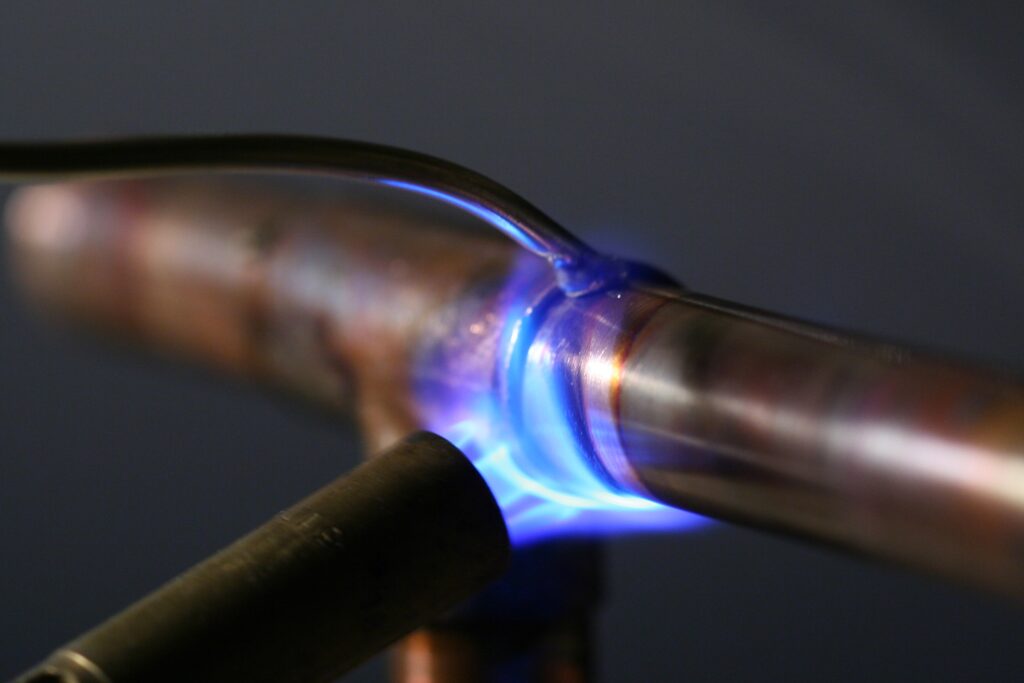
PPR systems are joined by heat fusion: the socket and pipe are melted and pushed together, and a correct joint is effectively one continuous piece of material. The corollary is that a bad fusion joint, wrong temperature, wrong dwell time, dirty pipe, is a defect built into the wall on day one. It typically survives commissioning and fails months later.
Replace this with your own breakdown: of the concealed leaks you have located, what share were fusion-joint defects, what share were mechanical damage from later trades, and what share were material failure?
Why this happens in Abuja specifically
- Deep chases in blockwork, finished in stone. Premium finishes mean opening a wall is expensive and matching it later is often impossible. That raises the value of locating precisely before cutting.
- Multiple trades after first fix. Pipework is installed, then tilers, joiners and AC installers all work around it. A screw through a buried pipe is genuinely common, and it produces a leak that starts months after the plumber has left.
- Mixed materials on one system. It is normal to find PPR, PVC and galvanised steel on the same property from different phases of work. The transitions between materials are the weak points, and they are usually buried.
Common customer mistakes
Opening the wall at the damp patch
The most expensive assumption in plumbing. Locate first.
Replacing the pump because pressure is low
Low pressure with a pump that runs constantly is a leak signature. Replacing the pump buys a new pump and keeps the leak.
Accepting a repair with no pressure test afterwards
If it was not tested at the end, you do not know it is fixed, you know it is not dripping yet.
Patching a fusion joint with a mechanical clamp
A clamp on a PPR system is a way to get through the night, not a repair. It should always be followed by a proper re-fusion.
Our process
Establish whether it is supply or waste
Different tests, different tools, different cost. We settle this first because everything else depends on it.
Isolate and pressure-test by zone
We split the system and test section by section until the decay is trapped in one run. This is what turns a whole-house problem into a two-metre problem.
Pinpoint acoustically and confirm
Within the identified run we narrow to a point, then confirm with a second method before anything is cut.
Open once, repair, re-test, make good
One opening, a proper repair, re-fusion on PPR, correct transition fittings on mixed material, then the whole run is re-tested before the wall is closed.
Frequently asked questions
How do you find a leak without breaking the wall?
By isolating the system into zones and pressure-testing each one, then narrowing within the failing zone acoustically. The wall only opens once we can say which section, and roughly where along it, the fault sits.
How long does leak detection take?
Most domestic investigations are resolved in a single visit. Complex properties, long buried runs, several phases of pipework, mixed materials, can need a second visit, and we will tell you that on the first one rather than at the end.
Can you detect a leak under a concrete floor or in the garden?
Yes, and buried runs are where testing pays for itself most. Ground swallows the evidence, so the only reliable signal is pressure behaviour rather than visible damp.
Is a leak the reason my tanker spend went up?
Very often, yes. In Abuja the honest test is not the bill, it is whether your pump runs when every outlet in the house is closed. If it does, water is going somewhere.
My damp patch dried up. Has the leak stopped?
Usually it has moved, not stopped. Leaks change path as materials saturate and finishes swell. A patch that dries and returns is a leak that is still active.
Do you repair as well as detect?
Yes, on the same visit where the fault allows it. Detection that hands you a report and leaves is only half a job.
What if the leak is on a shared riser in my block?
We establish whose section it is on before any repair, because that determines who pays. We will document the finding so you can take it to the facility manager or the association.
Will my tiles or stone be matched afterwards?
We make good to the standard you had. Stone and imported tile are genuinely difficult to match years after a build, which is the strongest practical argument for locating precisely and opening once. Keep any spares from your original build.
Can a leak damage my building structurally?
Sustained water against reinforced concrete and blockwork is a structural concern, not just a cosmetic one. The risk is proportional to how long it runs, which is why a slow hidden leak is worse than a dramatic burst.
What guarantee do I get on the repair?
Workmanship is guaranteed for 12 months, and the repaired section is pressure-tested in front of you before we close the wall.
Key takeaways
- Water shows up metres from where it escapes, the damp patch is evidence of arrival, not origin.
- Pressure decay testing converts a whole-house mystery into a two-metre repair.
- A pump that runs with every tap closed is the clearest sign of a concealed or buried leak.
- Supply leaks and waste leaks are different investigations and should be priced differently.
- Insist on a pressure test after the repair, before the wall is closed.
Sources & methodology
Internal data. Observations on this page come from our own work across the 25 Abuja districts we cover. Where we have no verified record, we describe the pattern rather than quote a number, because we do not publish figures we cannot evidence.
External references. Engineering statements reflect standard, checkable practice: PPR pressure classification and heat-fusion jointing, pressure-decay testing, pump duty-point selection, pressure-vessel pre-charge behaviour, gravity drainage fall, and soil infiltration behaviour in soakaway design.
Get a fixed price for leak detection & pipe repair in Abuja
Tell us what is happening and where you are. We will tell you what we think it is, what testing we would do to confirm it, and what it will cost, before anyone touches your wall. Call 0706 727 6002 or send a photo on WhatsApp.