
When an Abuja household says “we have no water”, the borehole is almost never the reason. In the overwhelming majority of callouts the water is there and something between the borehole and the tap has stopped moving it, a float switch, a foot valve, a pressure vessel that has lost its air charge, or a control box that failed during a power switchover.
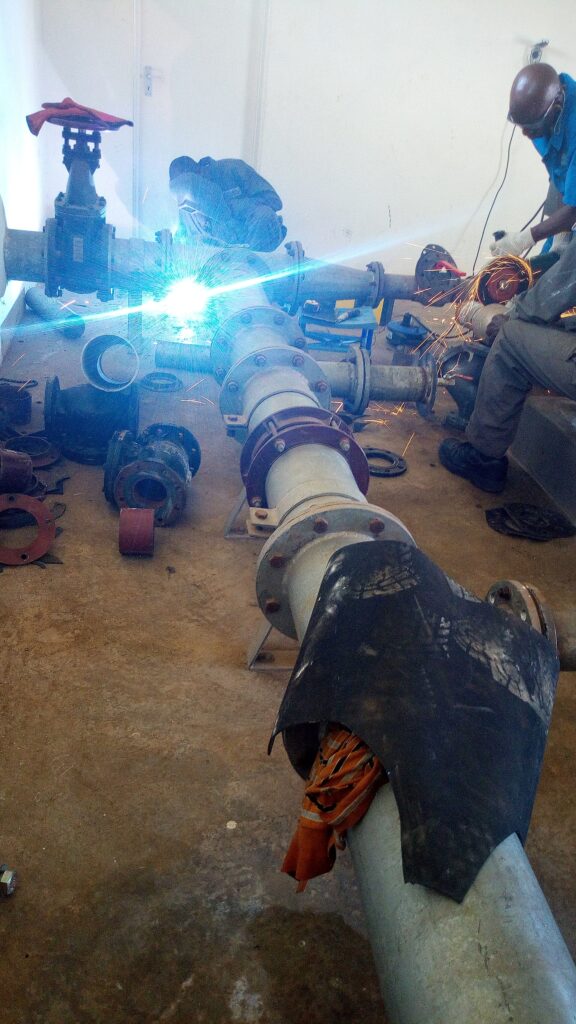
This matters because the cost gap is enormous. A control component is a modest repair. A replacement submersible plus the rig time to pull and reset it is a different order of magnitude. Being sold the second when you needed the first is the most expensive mistake in Abuja domestic water.
What we see most often
Float switches failing in the tank, not the borehole
The cheapest component in the whole system and the most frequent single point of failure.
Pressure vessels with no air charge left
The bladder loses its pre-charge, the pump then starts and stops rapidly on every tap opening. That rapid cycling is what actually kills the pump.
Foot valve or non-return valve leaking back
The system loses prime overnight. Morning symptom: the pump runs but nothing arrives, then eventually it does.
Pumps specified for tank filling, asked to deliver house pressure
Two different duties. One pump rarely does both well, and the symptom is pressure that collapses the moment a second outlet opens.
The engineering, and what it means for you
The engineering is standard and worth knowing before anyone quotes you. A pump is specified against a duty point: the flow rate you need, at the head (pressure) you need. Head includes the vertical lift, plus friction losses along the pipe run, plus the residual pressure you want at the outlet. A pump chosen on horsepower alone, without a duty point, is chosen by guesswork.
A pressure vessel works because a sealed air cushion, separated from the water by a bladder, is compressible while water is not. Its pre-charge should be set slightly below the pump cut-in pressure. When the charge is lost, the vessel stops buffering and the pump short-cycles, starting and stopping many times per minute. Motor start current is far higher than running current, so short-cycling is thermally destructive, and it is the mechanism behind a large share of “the pump suddenly burnt” cases.
Submersible pumps are cooled by the water flowing past the motor. Running one dry removes the cooling, not just the output, which is why a dry-run cut-out is protection for the pump, not a convenience feature.
Replace this with your own numbers: across your pump callouts, what share were resolved by replacing a control component versus replacing the pump itself?
Why this happens in Abuja specifically
- Interrupted power and switchover. Frequent transitions between grid and generator subject pump motors to repeated hard restarts and, on poor installations, to voltage that is out of tolerance. Protection at the control box is not optional here.
- Seasonal water table movement. The FCT’s sharp wet and dry seasons move static water levels. A borehole comfortable in September can draw down in March, and a pump set at the wrong depth will break suction and run dry at the same time every year.
- Sediment and screen fouling. Fine material accumulates in the borehole over years and reduces yield gradually. The household experiences this as the pump getting weaker, which invites an unnecessary pump replacement when the real issue is downhole.
- Large plots, long runs. In Asokoro and Maitama the distance from borehole to tank to house is often substantial, and friction loss over that distance is routinely left out of the sizing.
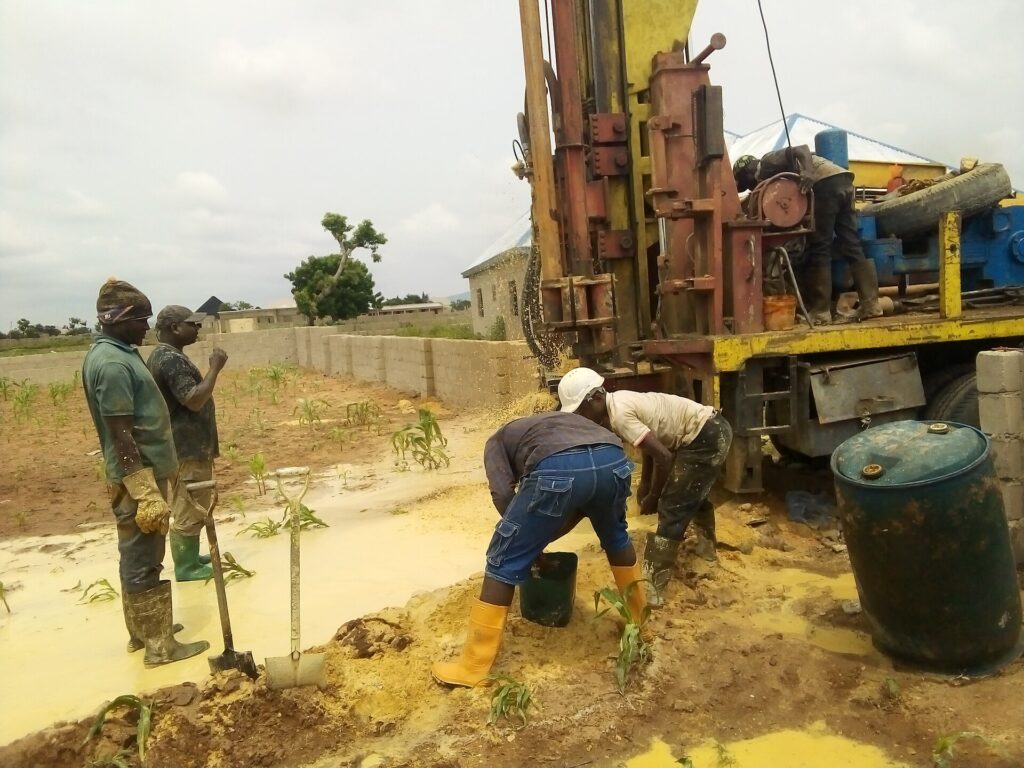
Common customer mistakes
Buying a bigger pump to fix weak pressure
If the restriction is a part-closed valve, a blocked filter or a flat pressure vessel, a bigger pump raises your electricity bill and changes nothing else.
Skipping dry-run and voltage protection
The cheapest insurance available on an Abuja installation, and the most commonly omitted.
Ignoring rapid pump cycling
Short-cycling is not a quirk. It is active destruction of the motor, and it is usually a twenty-minute pressure-vessel fix.
Letting anyone pull a submersible before testing
Pulling the pump is the expensive step. Almost everything that commonly fails can be tested without it.
Our process
Test from the surface first
Power and voltage at the control box, control gear, float and level switches, non-return valves, pressure vessel pre-charge. Most faults are found and fixed here.
Establish the real duty point
Where pressure is the complaint, we measure: static and dynamic pressure, flow at outlets, and the actual lift and run length. That tells us whether your pump is faulty or simply wrong.
Only then, downhole
If surface testing clears everything, we look at the borehole, water level, yield behaviour under draw, and pump condition.
Repair or resize, with the numbers shown
If we recommend a different pump, you get the duty point it was chosen against, not just a brand and a horsepower.
Frequently asked questions
Why does my pump run but no water comes out?
Usually loss of prime through a leaking foot valve or non-return valve, an empty tank with a failed float, or a closed valve somewhere in the line. All three are cheap. None of them require a new pump.
What makes a pump switch on and off every few seconds?
A pressure vessel that has lost its air pre-charge, or a waterlogged bladder. This is short-cycling, it is actively destroying the motor, and it is normally a same-visit fix.
My water pressure is fine downstairs and weak upstairs. Why?
Usually insufficient head for the top floor rather than a fault. Either the tank is not high enough relative to the upper outlets, or the pump was sized without including the vertical lift and friction losses. A booster arrangement solves it properly; a bigger tank does not.
How long should a water pump last in Abuja?
Far longer than most do. Lifespan here is determined less by the pump and more by what it is subjected to: dry running, short-cycling and out-of-tolerance voltage. Fit protection and the same pump lasts years longer.
Is my borehole drying up?
Possibly, but it is the least likely explanation and the most expensive one to act on. Declining yield is usually gradual and seasonal. Sudden total loss is almost always equipment.
Should I choose a surface pump or a submersible?
It depends on depth and duty, not preference. Surface pumps are easier to service but limited by suction lift. Submersibles handle depth and are quiet, but every service visit means pulling the pump. We will tell you which your situation actually calls for.
Can you service the pump without pulling it out of the borehole?
Most diagnosis, yes. Most repairs of control gear, valves and vessels, yes. Work on the pump itself means pulling it, which is why we test everything else first.
How often should a borehole system be serviced?
An annual check of pre-charge, protection settings, valve condition and float operation is cheap and prevents the failures that are expensive. Water quality testing is a separate recommendation and should be done independently.
Can you improve pressure without replacing anything?
Sometimes. Fully opening a throttled valve, cleaning a strainer or resetting a pressure switch can restore performance at no material cost. We check those before we quote hardware.
Do you install the protection gear as well?
Yes, dry-run cut-out, correctly rated control box and voltage protection. On an Abuja installation we consider this part of the job rather than an upsell.
Key takeaways
- “No water” is usually a control fault, not a borehole or pump failure.
- Short-cycling caused by a flat pressure vessel is the leading cause of premature pump death.
- A pump must be chosen against a duty point, flow and head, not against horsepower.
- Dry-run and voltage protection pay for themselves within one power event in Abuja.
- Test everything at the surface before anyone proposes pulling a submersible.
Sources & methodology
Internal data. Observations on this page come from our own work across the 25 Abuja districts we cover. Where we have no verified record, we describe the pattern rather than quote a number, because we do not publish figures we cannot evidence.
External references. Engineering statements reflect standard, checkable practice: PPR pressure classification and heat-fusion jointing, pressure-decay testing, pump duty-point selection, pressure-vessel pre-charge behaviour, gravity drainage fall, and soil infiltration behaviour in soakaway design.
Get a fixed price for borehole & pump repair in Abuja
Tell us what is happening and where you are. We will tell you what we think it is, what testing we would do to confirm it, and what it will cost, before anyone touches your wall. Call 0706 727 6002 or send a photo on WhatsApp.